
GAYATHRI R.M
Student Assistant
biotechSpecializing in Agroecology4climate and Rural Development
personAbout Me
workResearch Experience
schoolEducation
Recent Activities
Latest updates from GAYATHRI's research involvement.
 Feb 2026
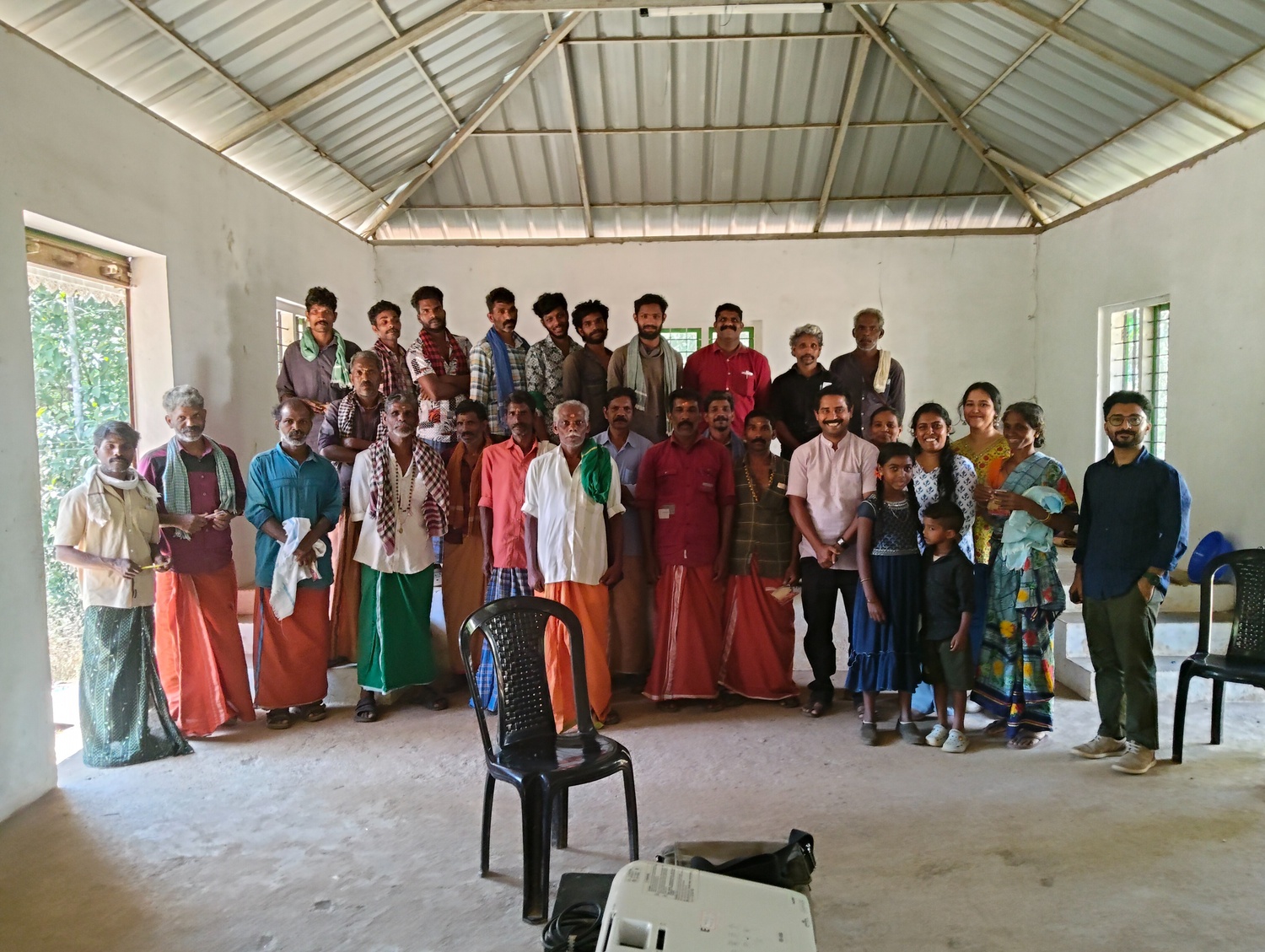
As part of the NFRF project ‘International Agroecological Transitions for Climate Adaptation and Mitigation’, a series of sensitization workshops on agroecology was conducted during February 2026 across the districts of Idukki, Wayanad, Kannur, and Kozhikode. A total of five workshops were organized with the objective of familiarizing farmers with the concepts, principles, and practical applications of agroecology in the context of climate-resilient agriculture. The sessions were led by Sri. Illiyas K.P., President of the Organic Farming Association of India (OFAI), and Mr. Haani T., Ph.D. Scholar at the University of Hohenheim, Germany. During the workshops, farmers were introduced to the Food and Agriculture Organization (FAO) ‘Ten Elements of Agroecology,’ which served as guiding principles for understanding sustainable and resilient farming systems. Special emphasis was given to the FAO-TAPE (Tool for Agroecology Performance Evaluation), a framework used to assess agroecological systems beyond crop productivity by considering factors such as diversity, resilience, efficiency, recycling, social values, and governance. Findings from the Kerala field study undertaken as part of the project were presented to help farmers understand the extent to which agroecological principles are currently being practiced in the state. The sessions effectively connected local farming experiences with global research perspectives, highlighting the significance of farmers’ traditional knowledge in climate adaptation and sustainable agriculture. A Focus Group Discussion (FGD) was also conducted, during which farmers shared their experiences, concerns, and perspectives related to agroecology. The major challenges identified included increasing incidences of pests and diseases, rainfall variability, lack of access to farm machinery, limited awareness of modern farming practices, unavailability of quality planting materials, inadequate irrigation facilities, paddy procurement issues, weak extension support, marketing constraints, and labour shortages. Farmers emphasized the importance of conserving traditional crops and indigenous varieties that are well adapted to local agro-climatic conditions and contribute to food security and climate resilience. The participants also observed that excessive dependence on chemical inputs has adversely affected soil fertility and farm sustainability. Many farmers stated that they had already started reducing the use of chemical inputs and were gradually transitioning towards organic farming practices. They recognized agroecology as a sustainable pathway that could reduce input dependency, improve farm resilience, and address climate change-induced challenges such as declining productivity and increasing pest and disease outbreaks. In addition, farmers acknowledged the potential of agroecological practices to create opportunities for supplementary income generation. The discussions further highlighted the important role played by organizations such as Kerala Jaiva Karshaka Samidhi (KJKS), Fair Trade Alliance Kerala (FTAK), and Farmer Producer Organizations (FPOs) in providing technical guidance, training, awareness creation, and market linkages for promoting agroecological farming practices. Field visits were also conducted as part of the programme to assess the extent to which agroecological practices are being adopted at the farm level. The workshops successfully enhanced farmers’ understanding of agroecology as a climate-resilient and sustainable approach to agriculture. The interactions and field-level discussions revealed a growing interest among farmers in reducing chemical dependency and adopting ecologically sustainable farming practices. The programme also highlighted the importance of strengthening institutional support, knowledge sharing, and farmer-led initiatives to facilitate a wider transition towards agroecological farming systems in Kerala.